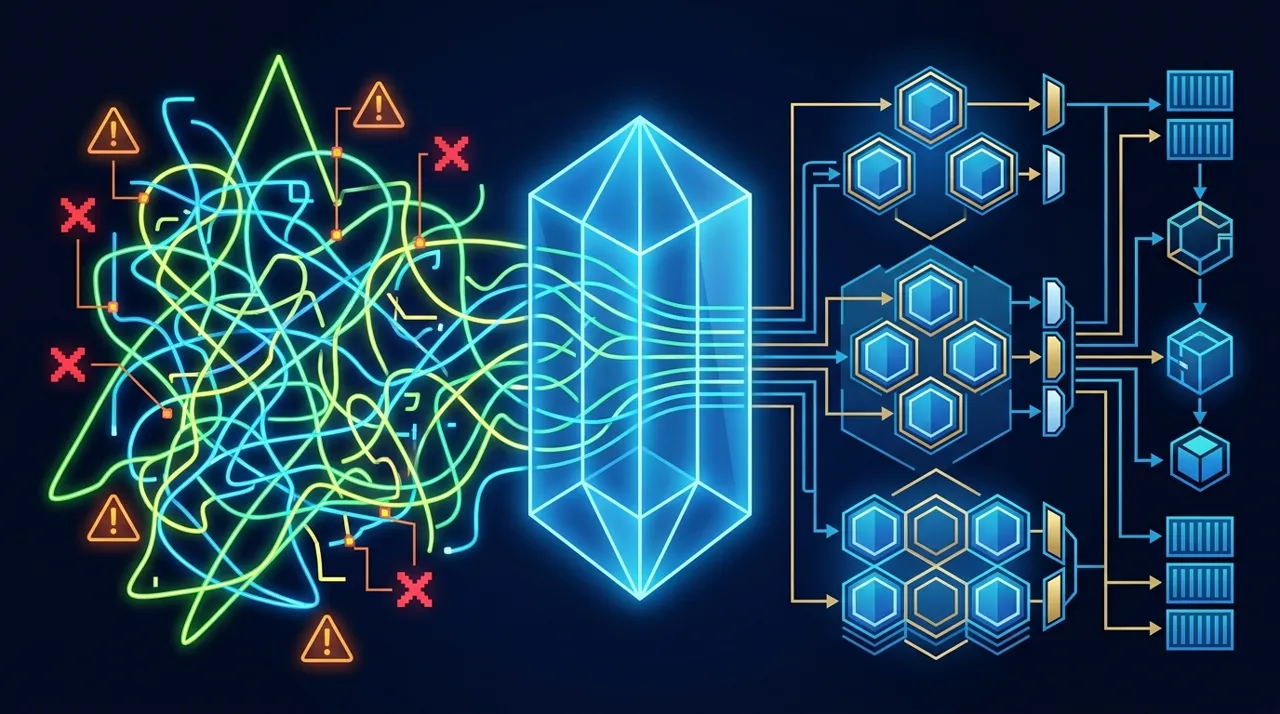
The prospect of modernizing an aging, revenue-critical legacy monolith fills most engineering organizations with dread. Teams are trapped between two unpalatable choices: continue paying exorbitant hosting bills on unmaintainable virtual private servers (VPS) with constant downtime risks, or attempt a dreaded “Big Bang Rewrite”—a multi-year endeavor that industry research demonstrates fails over 70% of the time due to scope creep, feature drift, and catastrophic deployment regressions.
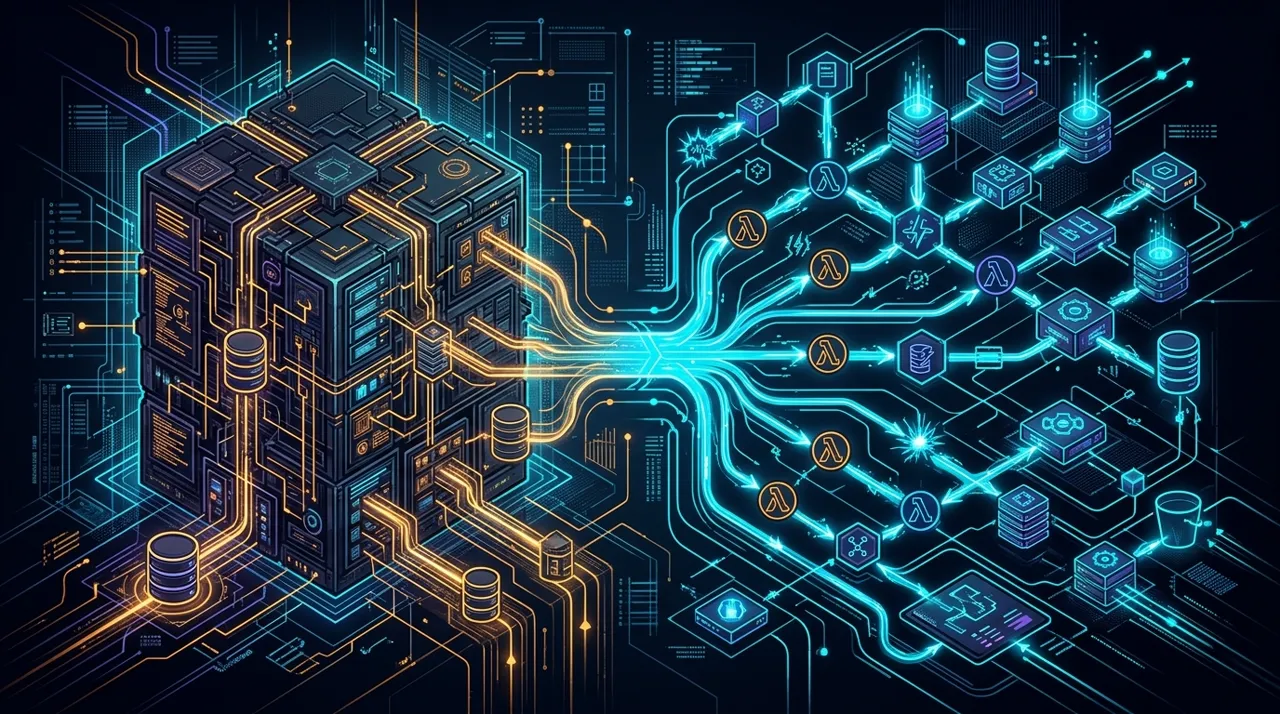
Enterprise cloud modernization is not achieved through high-risk rewrites. It is executed through incremental, surgical extraction using the Strangler Fig Pattern. By deploying an intelligent edge routing layer and asynchronous Change Data Capture (CDC) synchronization, you can migrate high-value domains to AWS Serverless incrementally with 100% continuous uptime.
💡 Executive Summary: Zero-downtime cloud migration replaces legacy monoliths gradually using the Strangler Fig pattern at the edge (CloudFront/API Gateway), synchronizing databases via Change Data Capture (CDC), and executing risk-free canary cutovers without interrupting customer transactions.
1. Architectural Strategy: The Strangler Fig Pattern
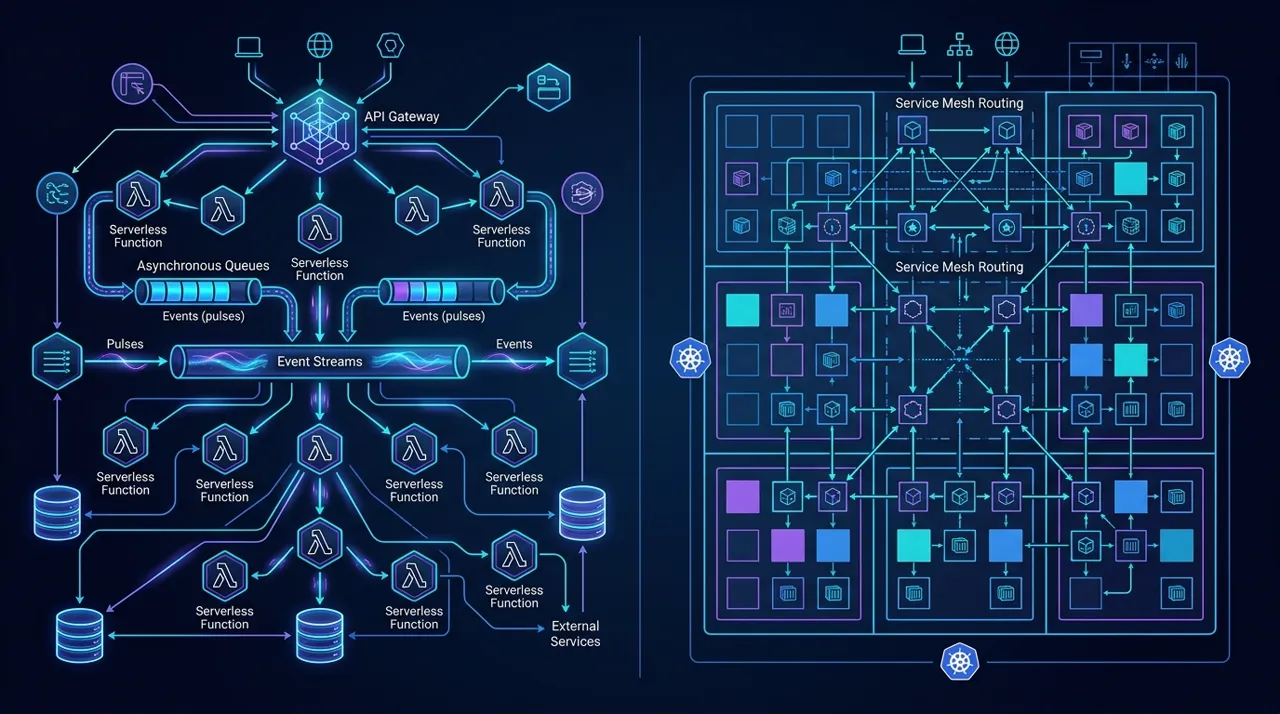
Coined by Martin Fowler, the Strangler Fig pattern draws its metaphor from vines that seed in the upper branches of a host tree, slowly growing downward until the original tree is completely replaced. In software architecture, we place an edge proxy in front of the legacy monolith, intercepting inbound HTTP traffic and routing newly refactored paths to modern serverless microservices while passing legacy paths untouched to the existing backend.
flowchart LR
    A[Client Requests] --> B[Amazon CloudFront Edge]
    B -- Default Path /* --> C[Legacy Monolith on EC2/VPS]
    B -- /api/v2/orders/* --> D[Amazon API Gateway]
    D --> E[Serverless Order Lambda]
    E --> F[(Amazon DynamoDB)]
C -. CDC Sync .-> F| Migration Phase | Traffic Routing Strategy | Primary Database Architecture | Risk Level |
|---|---|---|---|
| Phase 0: Edge Ingress Interception | CloudFront routes 100% of traffic directly to the legacy origin. | Legacy monolithic database (MySQL / Postgres). | Zero |
| Phase 1: Read-Only Domain Extraction | CloudFront routes read-heavy endpoints (e.g., /catalog) to Serverless Lambda. | Read-replica sync or asynchronous CDC streaming. | Low |
| Phase 2: Bidirectional Dual-Writing | State mutations route to modern services; events sync back to legacy tables. | EventBridge / SQS replication ensuring data parity. | Medium |
| Phase 3: Domain Cutover & Decommissioning | Modern serverless service becomes single source of truth; legacy paths deleted. | Native AWS Serverless storage (DynamoDB / Aurora Serverless). | Zero |
2. Edge Routing: AWS CDK TypeScript Blueprint
The foundation of zero-downtime migration is declaring multiple origins within a single Amazon CloudFront distribution. Below is a production-grade AWS CDK (TypeScript) construct routing legacy and modern paths dynamically:
import * as cdk from 'aws-cdk-lib';
import { Construct } from 'constructs';
import * as cloudfront from 'aws-cdk-lib/aws-cloudfront';
import * as origins from 'aws-cdk-lib/aws-cloudfront-origins';
import * as apigateway from 'aws-cdk-lib/aws-apigateway';

export class StranglerMigrationStack extends cdk.Stack {
  constructor(scope: Construct, id: string, props?: cdk.StackProps) {
    super(scope, id, props);

    // 1. Legacy Monolith Origin (Custom Domain / VPS Host)
    const legacyOrigin = new origins.HttpOrigin('legacy-monolith.internal.tijiki.com', {
      protocolPolicy: cloudfront.OriginProtocolPolicy.HTTPS_ONLY,
      httpPort: 80,
      httpsPort: 443,
    });

    // 2. Modern Serverless API Gateway Origin
    const modernServerlessApi = new apigateway.RestApi(this, 'ModernServerlessApi', {
      restApiName: 'ModernServerlessMicroservices',
    });
    const modernOrigin = new origins.RestApiOrigin(modernServerlessApi);

    // 3. Central Strangler Distribution
    const distribution = new cloudfront.Distribution(this, 'StranglerEdgeDistribution', {
      comment: 'Strangler Fig Edge Router: Zero-Downtime Migration',
      // Default fallback behavior: All legacy paths go to monolithic server
      defaultBehavior: {
        origin: legacyOrigin,
        viewerProtocolPolicy: cloudfront.ViewerProtocolPolicy.REDIRECT_TO_HTTPS,
        allowedMethods: cloudfront.AllowedMethods.ALLOW_ALL,
        cachePolicy: cloudfront.CachePolicy.CACHING_DISABLED, // Pass headers directly
        originRequestPolicy: cloudfront.OriginRequestPolicy.ALL_VIEWER,
      },
      // Extracted Serverless Domain: Routed seamlessly to AWS Lambda
      additionalBehaviors: {
        '/api/v2/checkout/*': {
          origin: modernOrigin,
          viewerProtocolPolicy: cloudfront.ViewerProtocolPolicy.REDIRECT_TO_HTTPS,
          allowedMethods: cloudfront.AllowedMethods.ALLOW_ALL,
          cachePolicy: cloudfront.CachePolicy.CACHING_DISABLED,
          originRequestPolicy: cloudfront.OriginRequestPolicy.ALL_VIEWER,
        },
        '/api/v2/orders/*': {
          origin: modernOrigin,
          viewerProtocolPolicy: cloudfront.ViewerProtocolPolicy.REDIRECT_TO_HTTPS,
          allowedMethods: cloudfront.AllowedMethods.ALLOW_ALL,
          cachePolicy: cloudfront.CachePolicy.CACHING_DISABLED,
        },
      },
    });

    new cdk.CfnOutput(this, 'CloudFrontUrl', {
      value: distribution.distributionDomainName,
    });
  }
}
3. Data Synchronization: Change Data Capture (CDC) without Latency Penalties
The most hazardous phase of monolith migration is data consistency. If the legacy monolith and modern serverless services operate on separate databases, how do you prevent split-brain states?
The Two Golden Approaches
- Dual-Writing via Asynchronous Event Sinks: Never write synchronously to two databases inside a request handler (a distributed transaction antipattern). Instead, write to the primary database and publish an event to Amazon EventBridge or SQS, allowing asynchronous workers to replicate state with eventual consistency.
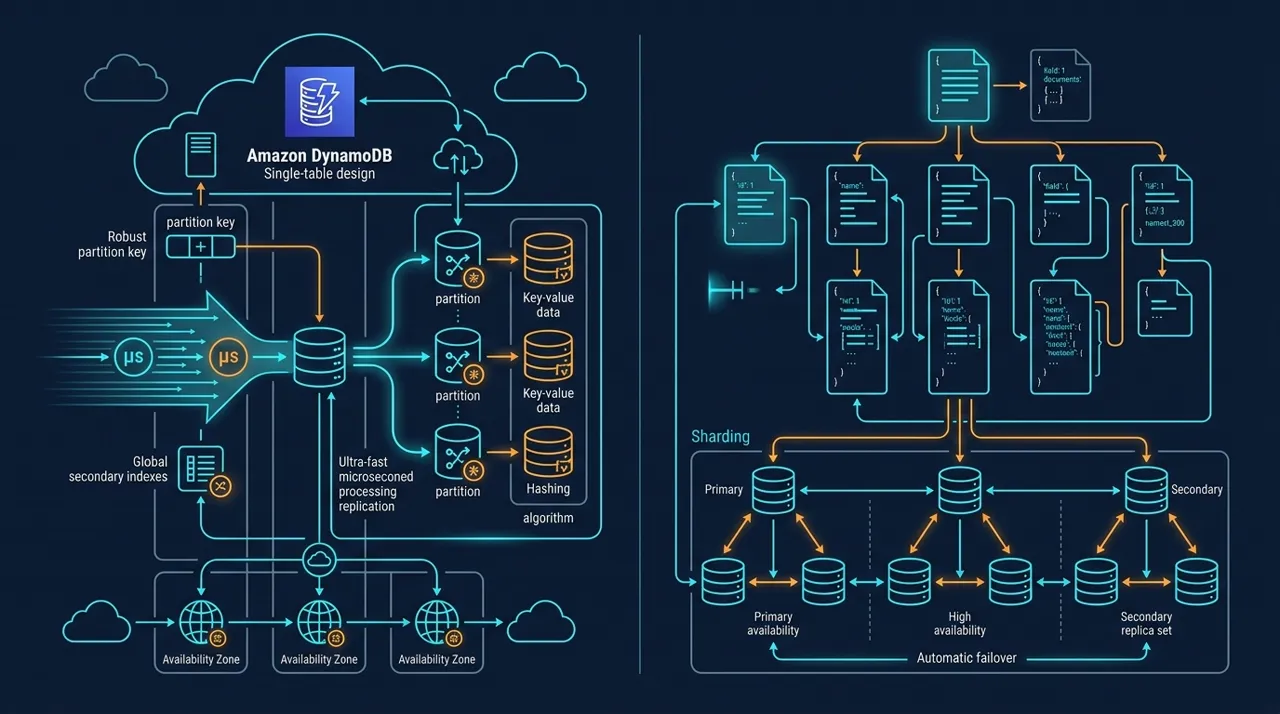
- Change Data Capture (CDC) with Debezium & AWS DMS: Attach AWS Database Migration Service (DMS) directly to the transaction log (WAL in PostgreSQL or Binlog in MySQL). DMS streams row-level changes into Amazon Kinesis or DynamoDB in near real-time (<500ms lag) without imposing CPU query overhead on the legacy database.
4. FinOps & Operational ROI: Retiring Monolithic Infrastructure
Migrating from fixed-capacity hosting to Serverless produces dramatic shifts in your cost structure:
TCO Comparison: Legacy Monolithic VPS vs. Modern AWS Serverless
Workload: 15 Million requests/month with heavy daytime variance (80% idle capacity at night).

1. Legacy Dedicated VPS / Cloud Compute Estate:
- 2 Primary Compute Instances (32GB RAM, 8 vCPUs) for redundancy: $480.00 USD
- 1 Standby Replica & Backup Server: $240.00 USD
- Managed Load Balancer & High-Capacity Storage: $180.00 USD
- Monthly Infrastructure Total: ~$900.00 USD / month (fixed regardless of usage).

2. Modern AWS Serverless Architecture (Lambda + DynamoDB + API Gateway):
- Lambda compute (arm64 Graviton @ 512MB, 120ms avg): ~$25.00 USD
- Amazon DynamoDB On-Demand: ~$28.00 USD
- Amazon API Gateway HTTP APIs: ~$15.00 USD
- CloudFront Data Ingress: ~$12.00 USD
- Monthly Infrastructure Total: ~$80.00 USD / month.
Direct Financial Impact: Modernizing to Serverless yields an immediate ~91% reduction in monthly infrastructure costs ($80 vs $900), while unlocking auto-healing high availability across three AWS Availability Zones that would cost thousands of dollars to replicate on traditional virtual machines.
5. Critical Antipatterns and Architectural Traps
1. The Shared Database Anti-Pattern
Allowing newly extracted serverless functions to connect directly to the legacy monolithic database tables.
- The Failure: The monolith’s schema changes break the serverless functions, and Lambda’s horizontal scaling exhausts database connection limits, bringing down both systems simultaneously.
- The Remedy: Every extracted domain must own its data store. Synchronize state through asynchronous events, never through shared SQL joins.
2. Migrating Write Workloads Before Read Paths
Attempting to extract the complex transactional checkout mutation before decoupling simple read-only catalog queries.
- The Remedy: Start with read-heavy, low-risk bounded contexts (e.g., product catalog, user profile display). This battle-tests your CloudFront routing, observability, and deployment pipelines before tackling financial transactions.
Frequently Asked Questions (FAQ)
How long does a typical Strangler Fig migration take?
Depending on monolith complexity, a professional migration spans 8 to 16 weeks. Because extraction occurs domain by domain, business value and cost reductions are delivered incrementally from Week 2 onward—unlike big-bang rewrites that deliver zero value until the end.
What happens if a newly deployed serverless route fails?
Because routing is controlled at the CloudFront or API Gateway edge, initiating a rollback takes less than 60 seconds. By adjusting origin weights or route rules, traffic instantly reverts to the legacy monolith without deploying code or experiencing customer downtime.
How do we handle user authentication across both systems?
Deploy a centralized JWT verification layer at the edge. The legacy authentication system issues tokens with shared cryptographic signing keys, allowing modern AWS Lambda authorizers to validate identity seamlessly without querying the legacy database.
Conclusion & Cloud Migration Diagnostic
Migrating from a legacy monolith to serverless does not require gambling your company’s future on an all-or-nothing rewrite. By adopting the Strangler Fig pattern, decoupling domains with strict bounded contexts, and leveraging event-driven synchronization, you modernize your stack with guaranteed continuity and immediate ROI.
🛠️ Trapped in an expensive, unmaintainable legacy monolith?
At Tijiki, our senior architects design and execute zero-downtime cloud migration blueprints, transitioning legacy systems to high-performance AWS serverless architectures.
👉 Book a Free 30-Minute Cloud Architecture & FinOps Diagnostic Session