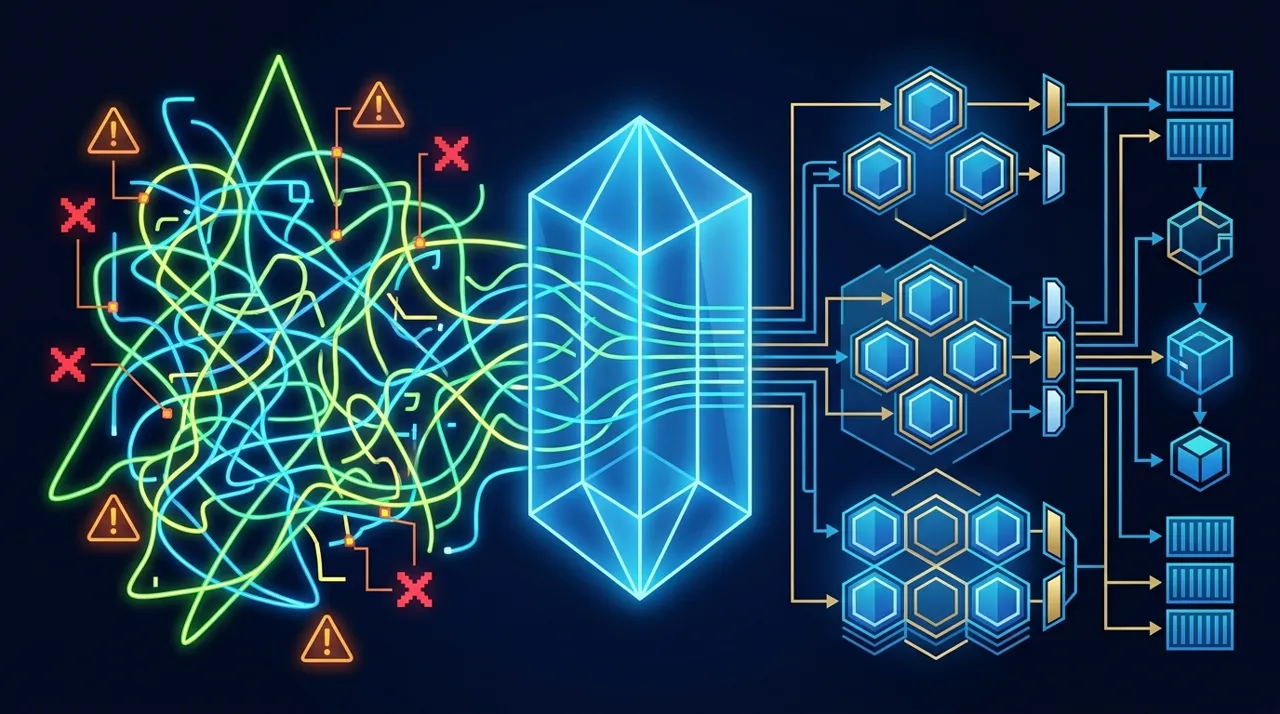
Choosing between a pure Serverless architecture and a containerized microservices ecosystem (Docker orchestrated via AWS ECS, Fargate, or Kubernetes/EKS) is one of the most consequential decisions an engineering organization will ever make. It is never merely an infrastructure nuance or developer tooling preference; this architectural fork governs your company’s time-to-market, monthly cloud unit economics, operational talent overhead, and system survivability during extreme demand surges.
In 2026, the architectural debate is no longer ideological. Both paradigms have matured, leaving behind both dogmatic hype and premature dismissals. Engineering leadership can now evaluate empirical benchmarks and financial trade-offs with surgical clarity. Yet we still witness early-stage startups bankrupting their seed runways maintaining over-engineered Kubernetes clusters, while established scaleups choke compute-heavy streaming workloads inside ephemeral function wrappers.
💡 Executive Summary: Serverless maximizes developer velocity and eliminates idle cost through fully managed, event-driven scaling. Containerized microservices deliver predictable compute unit economics for continuous high-throughput workloads while bypassing execution timeouts, memory limits, and cold-start concerns.
1. Architectural Foundations: Operational Abstraction and Tradeoffs
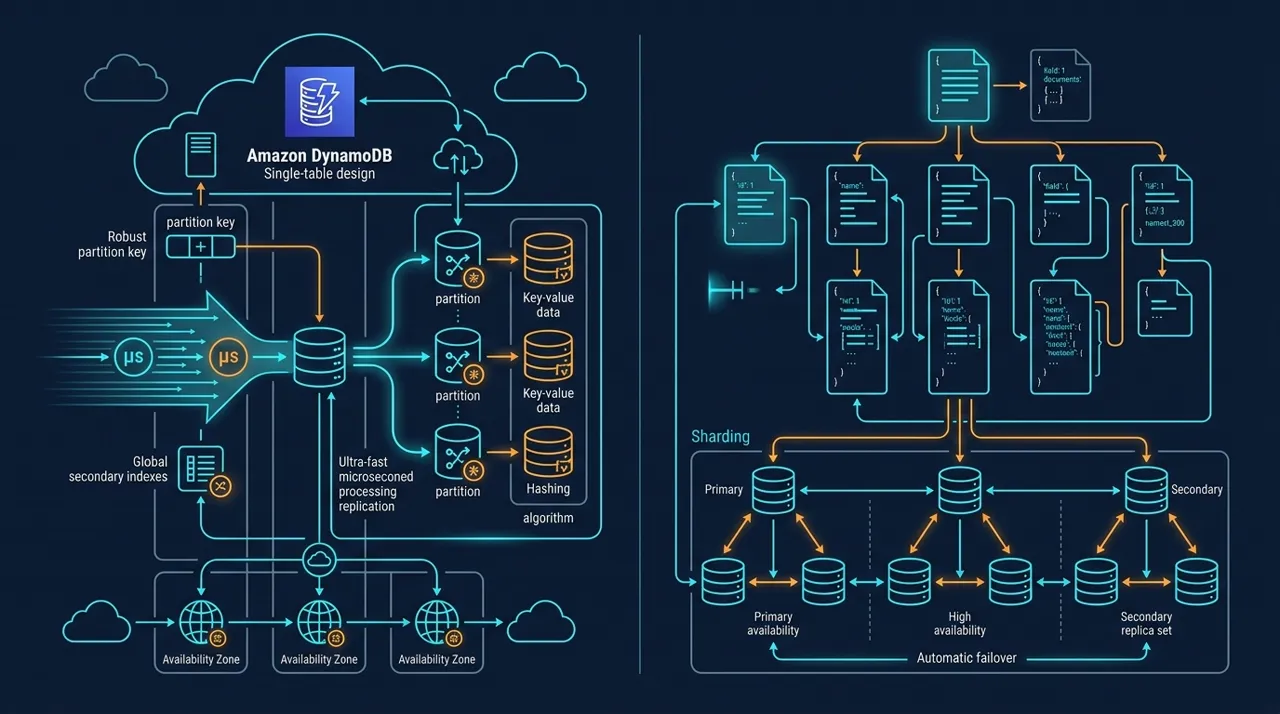
The fundamental distinction between Serverless and containerized microservices does not lie in code granularity or module sizing. It centers on operational abstraction boundaries and the compute execution lifecycle. In a true serverless ecosystem (FaaS combined with managed services like Amazon DynamoDB, Amazon SQS, and Amazon EventBridge), compute is strictly ephemeral and demand-reactive: the cloud provider provisions, scales, patches, and charges exclusively for executed milliseconds.
Conversely, containerized microservices assume persistent capacity. Even in serverless container models like AWS Fargate, you manage task lifecycles, configure autoscaling policies based on CPU/memory thresholds, handle traffic balancing via Application Load Balancers (ALBs), and maintain application container images.
| Architectural Dimension | Serverless (AWS Lambda / Event-Driven) | Containerized Microservices (ECS / Fargate / EKS) |
|---|---|---|
| Idle Cost (Zero Traffic) | $0.00 USD. Zero compute invocations equal zero compute charges, down to the exact millisecond. | Fixed Baseline Cost. Minimum 2 tasks across multi-AZs plus load balancer (ALB) active 24/7. |
| Elastic Scalability | Instantaneous: scales from 0 to thousands of concurrent executions in seconds natively. | Reactive: horizontal pod/task autoscaling requires 60 to 300 seconds to provision new runtime capacity. |
| Execution Ceiling | 15-minute hard limit per invocation (AWS Lambda). Unsuited for long-running daemon loops. | Unbounded runtime. Ideal for continuous batch processing, background workers, and long-lived daemons. |
| Operational Overhead | Zero OS maintenance, kernel patching, cluster orchestration, or node group upgrades. | Continuous container image patching, Dockerfile vulnerabilities, ingress controllers, and cluster health. |
| p99 Latency (Cold Starts) | Cold starts present during concurrency expansion (~30ms–150ms in Node/Go/Rust; mitigable with SnapStart). | Deterministic, ultra-consistent p99 latency because processes reside permanently warm in memory. |
| Network & Service Mesh | Managed VPC elastic network interfaces (ENIs) with cloud-native IAM security per function. | Granular control over East-West traffic, internal mutual TLS (mTLS), and Envoy-based Service Meshes. |
2. Event-Driven Decoupling vs. Service Mesh Orchestration
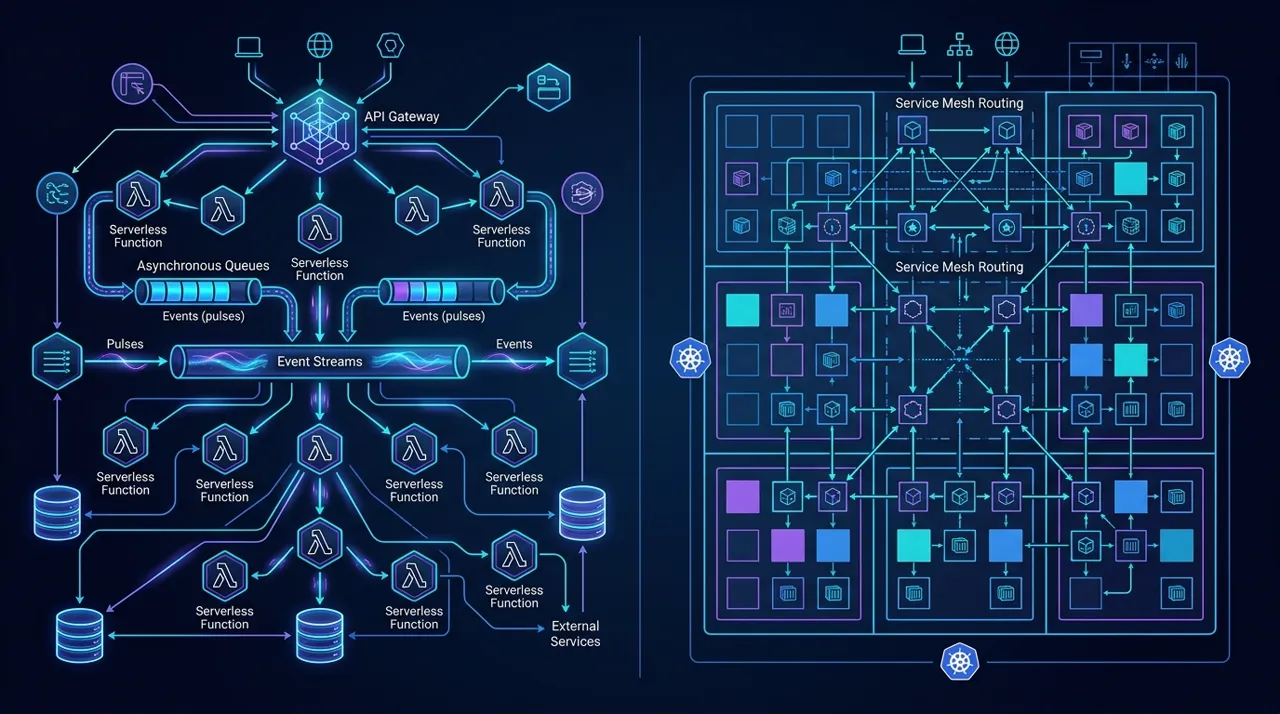
A pervasive architectural misconception is that Serverless and Microservices are mutually exclusive. In reality, a properly bounded serverless function is the purest implementation of a decoupled microservice, provided it adheres strictly to Domain-Driven Design (DDD) bounded contexts.
flowchart LR
    subgraph Serverless Topology
        A[API Gateway] --> B[AWS Lambda Handler]
        B --> C[(DynamoDB Single-Table)]
        B --> D[EventBridge Bus]
        D --> E[Async Worker Lambda]
    end

    subgraph Containerized Topology
        F[Application Load Balancer] --> G[ECS / EKS Pod 1]
        F --> H[ECS / EKS Pod 2]
        G --> I[(PostgreSQL RDS Cluster)]
        G -. Service Mesh / mTLS .-> H
    end
When Serverless Architecture is the Superior Strategic Choice
- Unpredictable, Spiky, or Bursty Traffic Profiles: Consumer applications, B2B SaaS with heavy 9-to-5 usage dips at night, monthly invoicing systems, or seasonal flash-sales. Paying for idle EC2 or Fargate tasks during off-peak hours is direct financial waste.
- Asynchronous Event Ingestion & Webhook Pipelines: Payment gateway webhooks, telemetry ingestion, document parsing, and third-party integrations benefit exponentially from queue-backed (SQS) and event-bus (EventBridge) serverless consumers with automatic backpressure handling.
- Product-Focused Engineering Squads: Teams lacking dedicated platform/DevOps engineers must delegate undifferentiated infrastructure heavy lifting to the cloud provider to focus 100% of engineering bandwidth on shipping business value.
When Containerized Microservices Prevail
- Continuous, Uniform High-Throughput Workloads: If your core API steadily processes 10,000+ requests per second 24/7 without significant valleys, reserved capacity on EC2 or Fargate is dramatically cheaper per compute unit than individual Lambda invocations.
- Persistent WebSockets & Bidirectional Streaming: High-frequency bi-directional stateful sockets, low-latency gaming gateways, and continuous gRPC streams demand long-lived in-memory server processes.
- Stringent Multi-Cloud Portability Mandates: Enterprise compliance environments demanding instantaneous cross-cloud portability across AWS, Azure, Google Cloud, and On-Premise bare metal without cloud-specific SDK refactoring.
3. Production Implementation: Resilient Enterprise Lambda Handler
Building enterprise-grade serverless APIs requires strict input contract validation, structured RFC 7807 problem details, correlation ID propagation for distributed tracing, and built-in idempotency to prevent duplicate mutations during retries.
Here is a hardened TypeScript production handler:
import { APIGatewayProxyEventV2, APIGatewayProxyResultV2 } from 'aws-lambda';
import { z } from 'zod';
import { randomUUID } from 'crypto';

// Strict schema validation enforcing domain boundaries
const OrderCreationSchema = z.object({
  orderId: z.string().uuid(),
  amountInCents: z.number().int().positive(),
  currency: z.enum(['USD', 'EUR', 'GBP']),
  customerEmail: z.string().email(),
  metadata: z.record(z.string()).optional(),
});

type OrderCreationPayload = z.infer<typeof OrderCreationSchema>;

// Standardized error schema adhering to RFC 7807
interface RFC7807ProblemDetails {
  type: string;
  title: string;
  status: number;
  detail: string;
  instance: string;
  correlationId: string;
}

export const handler = async (
  event: APIGatewayProxyEventV2
): Promise<APIGatewayProxyResultV2> => {
  const correlationId = event.headers['x-correlation-id'] || randomUUID();
  const idempotencyKey = event.headers['idempotency-key'];

  // 1. Enforce Idempotency Key for Financial State Mutations
  if (!idempotencyKey) {
    return createResponse(400, {
      type: 'https://api.tijiki.com/errors/missing-idempotency-key',
      title: 'Missing Idempotency-Key Header',
      status: 400,
      detail: 'State-mutating requests require a unique Idempotency-Key header.',
      instance: event.rawPath,
      correlationId,
    });
  }

  // 2. Validate Payload Integrity
  if (!event.body) {
    return createResponse(400, {
      type: 'https://api.tijiki.com/errors/empty-payload',
      title: 'Missing Request Body',
      status: 400,
      detail: 'Request body must not be empty.',
      instance: event.rawPath,
      correlationId,
    });
  }

  try {
    const rawPayload = JSON.parse(event.body);
    const validatedData: OrderCreationPayload = OrderCreationSchema.parse(rawPayload);

    // 3. Execute Isolated Business Logic (Idempotent DynamoDB Condition Put)
    const result = await processOrder(validatedData, idempotencyKey, correlationId);

    return createResponse(201, {
      success: true,
      data: result,
      correlationId,
    });

  } catch (error) {
    if (error instanceof z.ZodError) {
      return createResponse(422, {
        type: 'https://api.tijiki.com/errors/validation-error',
        title: 'Unprocessable Entity',
        status: 422,
        detail: error.issues.map((i) => `${i.path.join('.')}: ${i.message}`).join(', '),
        instance: event.rawPath,
        correlationId,
      });
    }

    console.error(`[CRITICAL] Error processing request ${correlationId}:`, error);

    return createResponse(500, {
      type: 'https://api.tijiki.com/errors/internal-server-error',
      title: 'Internal Server Error',
      status: 500,
      detail: 'An unhandled exception occurred during processing.',
      instance: event.rawPath,
      correlationId,
    });
  }
};

function createResponse(statusCode: number, body: unknown): APIGatewayProxyResultV2 {
  return {
    statusCode,
    headers: {
      'Content-Type': 'application/json',
      'Cache-Control': 'no-store, max-age=0',
      'X-Content-Type-Options': 'nosniff',
    },
    body: JSON.stringify(body),
  };
}

async function processOrder(payload: OrderCreationPayload, idempotencyKey: string, correlationId: string) {
  // Production DynamoDB PutCommand with attribute_not_exists(idempotencyKey)
  return {
    orderId: payload.orderId,
    status: 'PROCESSED',
    idempotencyKey,
    processedAt: new Date().toISOString(),
  };
}
4. Deep AWS FinOps Analysis: Total Cost of Ownership (TCO)
Architects often make the fatal error of comparing raw compute invoices (RAM/vCPU cost per hour) while disregarding auxiliary data transfer, ingress routing, and engineering maintenance overhead.
Real-World Benchmark: 30 Million Requests / Month (~11.5 RPS Average)
Assumptions: Standard HTTP JSON API, 150ms execution duration, 512MB RAM allocation.
Scenario 1: Fully Managed Serverless (AWS Lambda + HTTP API Gateway)
- Lambda Invocations: 30,000,000 requests × $0.20 per 1M = $6.00 USD
- Lambda Compute (512 MB @ 150ms): 2,250,000 GB-seconds × $0.0000166667 = $37.50 USD
- Amazon API Gateway (HTTP APIs): 30,000,000 × $1.00 per 1M = $30.00 USD
- Total Cloud Compute & Routing: ~$73.50 USD / month

Scenario 2: Containerized Microservices (AWS ECS Fargate + ALB)
- 2 Fargate Tasks for Multi-AZ High Availability (0.5 vCPU, 1 GB RAM): ~$30.00 USD
- 1 Application Load Balancer (ALB) active 24/7: $16.20 USD base + $5.40 LCUs = ~$21.60 USD
- Total Cloud Compute & Routing: ~$51.60 USD / month
The Architect’s True TCO Verdict: While Fargate saves ~$22 USD on raw monthly cloud compute, managing container vulnerability scans, Dockerfile base image deprecations, autoscaling target tracking tuning, and ALB TLS certificate renewals consumes an estimated 10 to 15 senior engineering hours per month. At a market engineering rate of $80–$150/hr, containers cost upwards of $1,200/month in hidden human capital overhead. For 90% of startups and scaleups, Serverless is vastly cheaper on a Total Cost of Ownership basis.
5. Critical Antipatterns and Architectural Traps
Distributing systems across decoupled services introduces subtle failure modes that can silently degrade reliability and inflate invoices:
1. The Distributed Monolith (“Lambda Pinball”)
Decomposing a system into dozens of micro-functions where Function A calls Function B synchronously over HTTP, which in turn calls Function C.
- The Failure: Latency compounding (sum of all p99 latencies), cold-start cascading, and tripled runtime charges while functions idle waiting for downstream responses.
- The Remedy: Decouple services asynchronously using Amazon EventBridge or Amazon SQS, reserving synchronous execution strictly within bounded contexts or coordinated via AWS Step Functions.
2. Relational Database Connection Exhaustion (PostgreSQL / MySQL)
Lambda functions scaling horizontally to 1,000 concurrent instances establishing unmanaged connection pools directly into an Amazon RDS PostgreSQL instance.
- The Failure:
FATAL: remaining connection slots are reserved for non-replication superuser connections, resulting in cascading HTTP 500 outages. - The Remedy: Deploy Amazon RDS Proxy to pool and multiplex connections across ephemeral runtimes, or transition high-concurrency access patterns to Amazon DynamoDB.
3. The VPC NAT Gateway Bandwidth Surcharge
Placing Lambda functions inside a private VPC subnet to access internal resources, then routing external API calls through an AWS NAT Gateway.
- The Failure: Surging AWS NAT Gateway data processing fees ($0.045/hour + $0.045/GB processed), which frequently exceed the cost of the compute itself.
- The Remedy: Provision AWS VPC Gateway Endpoints for S3 and DynamoDB (100% free), and use VPC Interface Endpoints (PrivateLink) for AWS services to bypass the NAT Gateway.
Frequently Asked Questions (FAQ)
How significantly do cold starts impact production Serverless APIs?
Cold starts only occur when a new micro-VM container is provisioned during concurrency scaling. In modern runtimes like Node.js, TypeScript, Go, or Rust, initialization latencies average between 30ms and 120ms—virtually unnoticeable for standard web APIs. For compiled languages like Java, AWS Lambda SnapStart reduces initialization overhead by over 90%.
Should a startup start with Serverless or Docker containers in 2026?
Startups should overwhelmingly default to Serverless. Zero maintenance burden, zero cost when traffic is low, and instant elastic scaling allow early-stage teams to iterate at maximum velocity without dedicating scarce engineering bandwidth to infrastructure operations.
Can Serverless and containerized microservices coexist in the same architecture?
Yes, hybrid architectures are the enterprise gold standard. Teams typically deploy Serverless (API Gateway + Lambda + EventBridge) at the perimeter for API routing, authentication, and event ingestion, while deploying long-running computation, video encoding, or continuous machine learning models on AWS Fargate or EKS.
What WAF strategy protects Serverless APIs against Layer 7 exploits?
Attach AWS WAF directly to Amazon CloudFront or API Gateway. Configure AWS Managed Rule sets including the Common Rule Set (CRS), SQL Injection Rule Set, Known Bad Inputs, and an IP-based Rate Limiting rule (e.g., 2,000 requests per 5 minutes per IP) to mitigate application-layer DDoS and financial exhaustion attacks.
Conclusion & Architecture Health Check
The choice between Serverless and containerized microservices should be dictated by workload characteristics, traffic volatility, and team composition—not dogma. If your roadmap demands extreme iteration speed, burst resilience, and minimal operational overhead, Serverless provides the most robust engineering foundation. If your system runs uninterrupted, predictable computation around the clock, containerized services deliver the required control.
🛠️ Is your cloud architecture ready to scale, or are your AWS bills spiraling out of control?
At Tijiki, we partner with CTOs and engineering leaders to design resilient AWS serverless architectures, audit runaway cloud bills, and rescue MVPs from technical debt.
👉 Book a Free 30-Minute Cloud Architecture & FinOps Diagnostic Session