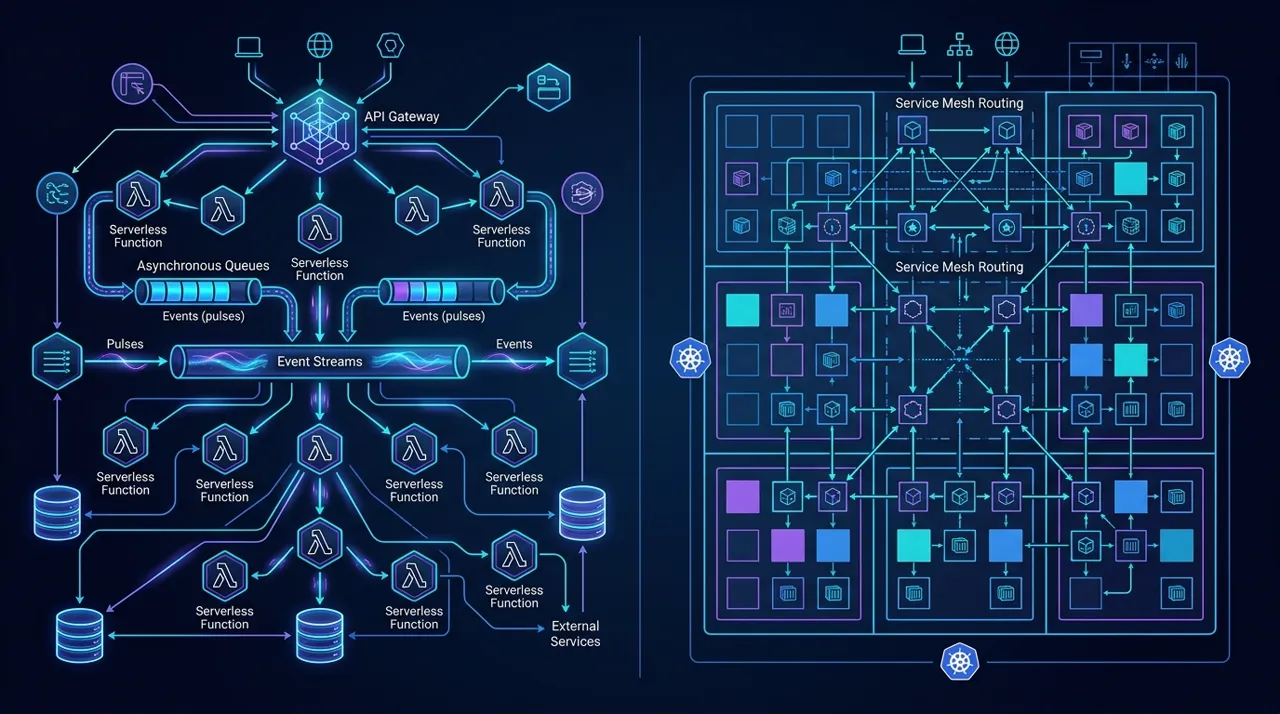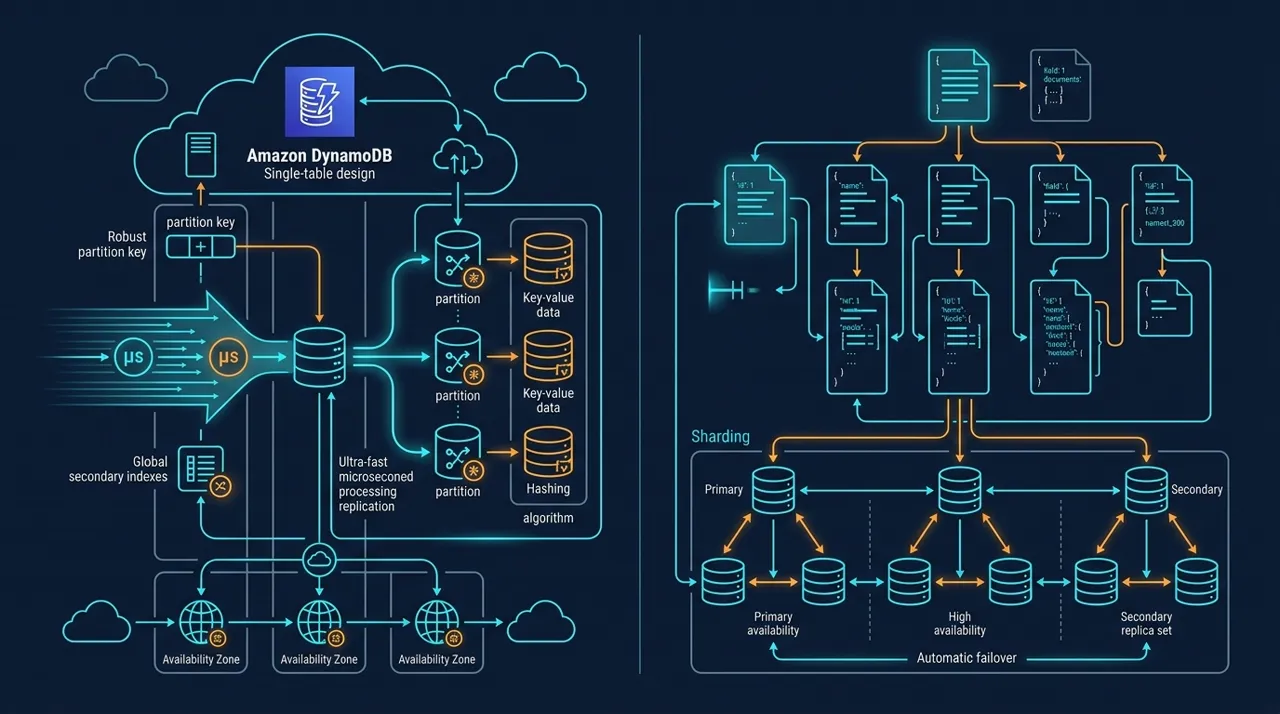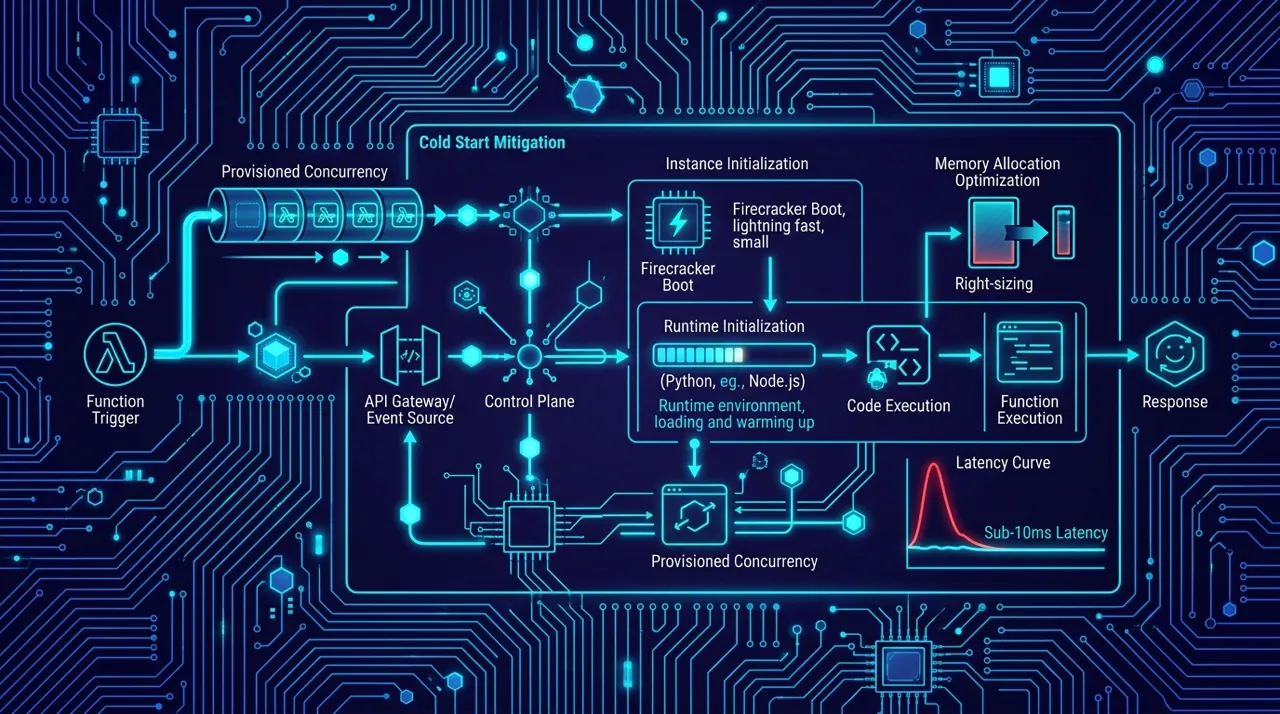
Cold starts remain the single most debated operational topic in serverless engineering. Sceptics cite 500ms to 2,000ms tail latencies as a justification for abandoning Serverless altogether in favor of static container clusters. Meanwhile, proponents frequently downplay cold starts as an edge-case occurring in less than 1% of total invocations.
For engineering leaders managing customer-facing APIs, financial transactions, or real-time bidding platforms, neither perspective is acceptable. A p99 latency spike of 1,200ms on an authentication or checkout endpoint directly degrades conversion rates, violates enterprise SLAs, and triggers client-side timeouts. Eliminating cold starts requires dismantling the Firecracker microVM initialization lifecycle and applying rigorous architectural mitigations.
💡 Executive Summary: AWS Lambda cold starts stem from container sandbox provisioning and synchronous runtime initialization. Mitigate them by allocating at least 1,769 MB RAM for dedicated vCPU compute, tree-shaking bundles with esbuild to under 5 MB, or enforcing schedule-based Provisioned Concurrency for latency-critical paths.
1. Anatomy of a Cold Start: The Execution Environment Lifecycle
To eliminate cold starts, an architect must understand the exact sequence of events executed by the AWS Lambda control plane when an unallocated event arrives:
sequenceDiagram
    autonumber
    actor Client
    participant GW as API Gateway / Event
    participant Plane as AWS Lambda Control Plane
    participant VM as Firecracker MicroVM
    participant Runtime as Node.js / Rust Runtime
    participant Code as Handler Code

    Client->>GW: POST /api/v1/orders
    GW->>Plane: Invoke Function (No Warm Sandbox Available)
    Note over Plane,VM: Phase 1: Environment Provisioning (AWS Internal)
    Plane->>VM: Allocate Slot & Launch MicroVM (~20ms)
    Plane->>VM: Download & Unpack Code Package (~30ms)
    Note over VM,Runtime: Phase 2: Runtime Initialization
    VM->>Runtime: Start Language Runtime (~40ms)
    Runtime->>Code: Import Modules & Global Context Execution (~80ms-800ms)
    Note over Code: Phase 3: Handler Execution
    Code->>Client: Return HTTP 201 Response (Warm Path Active: 5ms)
The Three Phases of Initialization
- Environment Provisioning (Platform Phase): AWS downloads your deployment artifact from Amazon S3, creates an isolated Firecracker microVM slot, and attaches necessary VPC Hyperplane elastic network interfaces (ENIs). For packages under 10 MB, this phase completes in under 35 milliseconds.
- Runtime Initialization (Init Phase): The runtime (Node.js, Python, JVM) bootstraps. The engine executes all code declared outside the
exports.handlerfunction—loading packages, compiling TypeScript metadata, establishing database clients, and resolving secrets. This is where 80% to 90% of customer latency is generated. - Handler Invocation: The event payload is passed to the handler function. Subsequent requests to this warm sandbox execute this phase exclusively, taking single-digit milliseconds.
2. Empirical Benchmarks: Cold Start Latency Across Runtimes
Not all runtimes are created equal. The table below illustrates real-world cold start benchmarks measured on AWS Lambda (x86_64 and arm64 Graviton3) with a baseline database client connection:
| Runtime & Language | Package Size | Cold Start (Init + Exec) | Warm Execution Latency | Memory Sweet Spot |
|---|---|---|---|---|
| Rust (custom.provided.al2023) | 3.2 MB | 18 ms – 35 ms | 1.8 ms | 256 MB – 512 MB |
| Go (provided.al2023) | 5.8 MB | 24 ms – 45 ms | 2.1 ms | 256 MB – 512 MB |
| Node.js 20.x (TypeScript / esbuild) | 4.1 MB | 75 ms – 130 ms | 4.2 ms | 1024 MB – 1769 MB |
| Python 3.12 (Boto3 / Pydantic) | 8.4 MB | 85 ms – 160 ms | 5.1 ms | 1024 MB – 1769 MB |
| Java 21 (Corretto with SnapStart) | 22.0 MB | 140 ms – 220 ms | 6.5 ms | 2048 MB |
| Java 21 (Without SnapStart / Spring Boot) | 35.0 MB | 1,800 ms – 4,200 ms | 8.0 ms | 3008 MB |
3. Four Architectural Mitigations to Eradicate Cold Starts
Strategy 1: The 1,769 MB vCPU Allocation Threshold
AWS Lambda allocates CPU power proportionally to configured memory. At 1,769 MB, Lambda assigns one full dedicated vCPU (2 vCPUs at 3,538 MB).
- The Impact: During the Runtime Init phase, importing dependencies (e.g., parsing large ASTs or initializing cryptographic libraries) is intensely CPU-bound. Upgrading a function from 512 MB to 1,769 MB frequently cuts the initialization phase duration by 60% to 75%, often resulting in a lower net cost due to shorter total billing duration.
Strategy 2: Ultra-Lean Bundling with esbuild
Monolithic bundling antipatterns—such as importing the entire AWS SDK (import AWS from 'aws-sdk') instead of modular v3 clients (import { DynamoDBClient } from '@aws-sdk/client-dynamodb')—introduce dozens of megabytes of unused AST into memory.
- Configure
esbuildwith aggressive tree-shaking, minification, and external exclusions for modules provided natively by the Lambda runtime.
Strategy 3: Provisioned Concurrency with Predictive Auto-Scaling
For latency-sensitive user journeys (e.g., login, payment gateway callbacks), Provisioned Concurrency allocates and pre-warms runtime environments, guaranteeing zero cold starts.
Below is an AWS CDK (TypeScript) construct demonstrating scheduled Provisioned Concurrency with Auto Scaling:
import * as cdk from 'aws-cdk-lib';
import { Construct } from 'constructs';
import * as lambda from 'aws-cdk-lib/aws-lambda';
import * as autoscaling from 'aws-cdk-lib/aws-applicationautoscaling';

export class ZeroColdStartStack extends cdk.Stack {
  constructor(scope: Construct, id: string, props?: cdk.StackProps) {
    super(scope, id, props);

    // 1. Production Lambda Function with Graviton3 Architecture
    const checkoutFunction = new lambda.Function(this, 'CheckoutHandler', {
      functionName: 'ProductionCheckoutHandler',
      runtime: lambda.Runtime.NODEJS_20_X,
      architecture: lambda.Architecture.ARM_64, // Graviton3: ~20% faster init
      memorySize: 1769, // 1 full dedicated vCPU
      timeout: cdk.Duration.seconds(10),
      handler: 'index.handler',
      code: lambda.Code.fromAsset('dist/checkout'),
    });

    // 2. Publish Immutable Version (Required for Provisioned Concurrency)
    const functionVersion = checkoutFunction.currentVersion;

    // 3. Create Alias with Provisioned Concurrency
    const liveAlias = new lambda.Alias(this, 'LiveCheckoutAlias', {
      aliasName: 'live',
      version: functionVersion,
      provisionedConcurrentExecutions: 5, // 5 warm instances ready 24/7
    });

    // 4. Auto-Scale Provisioned Concurrency based on Traffic Demand
    const scalingTarget = liveAlias.addAutoScaling({
      minCapacity: 5,
      maxCapacity: 100,
    });

    // Scale up aggressively when concurrent utilization exceeds 70%
    scalingTarget.scaleOnUtilization({
      utilizationTarget: 0.7,
      scaleInCooldown: cdk.Duration.seconds(300),
      scaleOutCooldown: cdk.Duration.seconds(0), // Instant scale-out
    });

    // Scheduled scaling for predictable business hours (e.g., 9am-6pm EST)
    scalingTarget.scaleOnSchedule('BusinessHoursSurge', {
      schedule: autoscaling.Schedule.cron({ hour: '13', minute: '0' }), // 13:00 UTC = 9:00 AM EST
      minCapacity: 25,
    });
  }
}
4. FinOps Analysis: The Economics of Provisioned Concurrency
Is Provisioned Concurrency expensive? Let’s calculate the exact math on AWS us-east-1:
Provisioned Concurrency Pricing
- Provisioned Rate: $0.0000041667 per GB-second.
- Execution Rate while provisioned: $0.0000097222 per GB-second.
Scenario: Maintaining 10 warm instances of a 1,024 MB function active 24/7:
- Memory: 10 instances × 1.0 GB = 10 GB
- Hourly cost: 10 GB × 3,600s × $0.0000041667 = ~$0.15 USD / hour
- Monthly cost: $0.15 × 730 hours = ~$109.50 USD / month
The Architect’s Verdict: Paying $109.50/month to guarantee absolute zero cold starts on your core revenue-generating endpoints is trivial compared to the engineering and infrastructure cost of running dedicated multi-AZ container clusters ($250+/month) or absorbing customer churn caused by p99 latency timeouts.
5. Critical Antipatterns and Architectural Traps
1. The Cron “Pinger” Fallacy
Scheduling an Amazon EventBridge rule to invoke a Lambda function every 5 minutes with a dummy payload to “keep it warm.”
- The Failure: A single pinger warms exactly one execution container. If 15 concurrent users hit your API simultaneously, 14 of them will experience a full cold start. Pinger scripts create a false sense of security while polluting application logs.
- The Remedy: Use native Provisioned Concurrency or optimize runtime code to achieve sub-80ms initialization times where cold starts become imperceptible.
2. Global Initialization of Unused Heavy Clients
Initializing heavy third-party SDKs (PDF generators, machine learning models, Stripe, Sendgrid) at the top of the file when the current invocation path only needs to execute a light health check.
- The Remedy: Implement lazy dynamic imports (
await import('./heavy-module')) inside execution branches that actually require the dependency.
Frequently Asked Questions (FAQ)
Do Lambdas connected to VPCs still suffer from severe cold starts?
No. Since AWS rolled out AWS Hyperplane ENIs, functions connected to VPCs experience virtually identical cold start latencies (under 30ms network overhead) as non-VPC functions. The multi-minute cold starts of 2018 have been completely resolved.
What is AWS Lambda SnapStart, and should I use it?
SnapStart is a performance optimization for Java and Python runtimes. AWS takes a Firecracker snapshot of the initialized execution environment and resumes from the snapshot during cold starts, reducing cold start times from several seconds to under 200 milliseconds at zero additional cost.
Does Graviton (arm64) reduce cold starts?
Yes. AWS Graviton3 processors feature superior single-threaded execution performance and memory bandwidth compared to legacy x86 architectures, resulting in 15% to 25% faster initialization times alongside 20% lower compute costs.
Conclusion & Latency Optimization Diagnostic
Cold starts are not an unavoidable curse of Serverless—they are an engineering constraint with deterministic architectural solutions. By right-sizing memory to unlock dedicated vCPUs, aggressively trimming runtime bundle size, and applying targeted Provisioned Concurrency, you can achieve sub-10ms p99 response times across your entire serverless estate.
🛠️ Are cold starts or latency spikes degrading your user experience?
At Tijiki, our senior cloud architects audit serverless runtimes, optimize initialization bottlenecks, and engineer sub-50ms tail latencies.
👉 Book a Free 30-Minute Cloud Architecture & FinOps Diagnostic Session